- We publish a summary version of our regular Drivers for the Week Ahead report, complemented by a look at what a Warsh-led Fed mean for markets.
- PMI and CPI headline the week ahead. Bank Indonesia risk raising rates.
- USD can extend recent gains, underpinned by the ongoing energy shock and resilient US economic activity.
Week Ahead
The May PMI readings for the US, Eurozone, UK, and Japan are published on Thursday. The data should help shape the debate around relative economic performance. In the US, the TIC data (Monday) and FOMC April meeting minutes (Wednesday) will be watched for clues on foreign demand for US longer term securities and the hurdle for rate hikes.
Inflation is another major focus, with April CPI prints due in Canada (Tuesday), the UK (Wednesday), and Japan (Friday). UK March labor market (Tuesday) and April retail sales (Friday), Japan Q1 GDP (Monday), and Australia April labor market data (Thursday) should also help guide expectations for the Bank of England, Bank of Japan, and Reserve Bank of Australia. Elsewhere, Bank Indonesia risk raising rates by 25bps to 5.00% to curtail IDR weakness (Wednesday).
Regardless, the Strait of Hormuz blockade will remain the dominant market driver because there is no clear endgame in sight while the buffer from global oil inventories is shrinking fast. As a result, crude oil prices are vulnerable to more upside, weighing on both global bond and equity markets.
The dollar index (DXY) looks likely to overshoot the upper end of its nearly one year 96.00-100.00 range. The US has a positive net energy balance and firm US economic activity back a more restrictive Fed.
Warsh Almighty
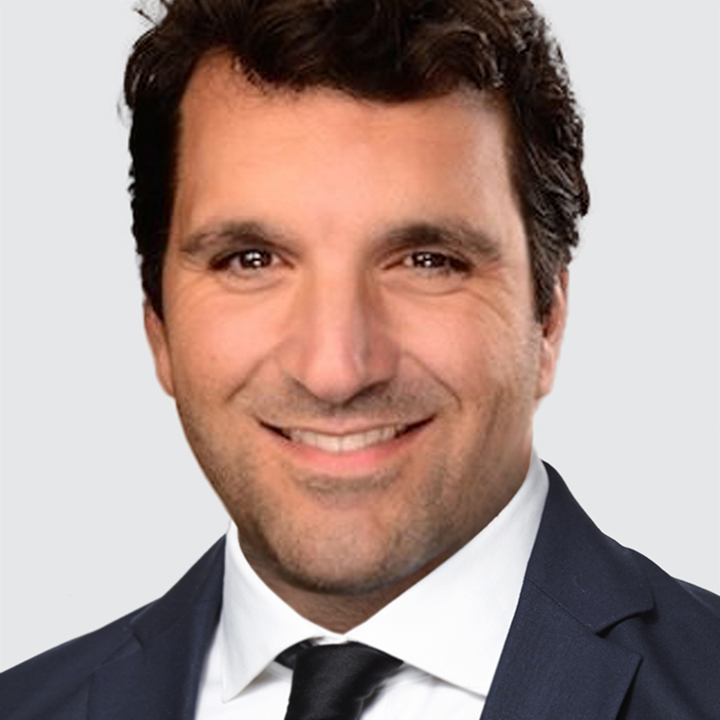
Kevin Warsh is expected to be sworn in as Federal Reserve (Fed) chair in the coming days, formally taking over from Jay Powell. Warsh will become the Fed’s 17th chair since 1913, and its 11th since the modern Federal Open Market Committee (FOMC) structure was established in 1936. He will inherit a Fed grappling with sticky inflation and a stabilizing labor market.
The June 16-17 FOMC meeting will mark Warsh’s first as Fed chair. That meeting also features an update to the Summary of Economic Projections (SEP), giving markets an early read on how Warsh intends to reshape the communication framework around the monetary policy outlook.
Warsh stressed during his Senate hearing he wants a regime shift in the Fed’s communication strategy. Warsh seems to lean towards strategic ambiguity, questioning the value of regular post-meeting press conference and arguing for fewer speeches from Fed officials.
Importantly, Warsh does not believe in forward guidance, blaming it for compounding the inflation is “transitory” mistake of 2021 and 2022. As such, expect Warsh to downplay the importance of the SEP and dot plots, at least until he can convince a majority of the FOMC to move away from them.
A clean break from the current communication framework will be challenging. A recent Brookings Institution survey of academic and private-sector Fed experts showed that 85% of the 52 respondents regarded the post-meeting press conference as “extremely useful or useful” and 56% said the same about the SEP (excluding dots) and dot plot.
The Consensus
The market narrative is that Kevin Warsh will steer the FOMC in a more dovish direction, weighing on USD and steepening the yield curve. That is hardly a groundbreaking take given Warsh’s view on productivity, inflation, and the Fed’s balance sheet.
(i) Warsh implied that the productivity boost from artificial intelligence (AI) justifies lower interest rates. In a November 16, 2025, commentary titled “The Federal Reserve’s Broken Leadership” Warsh argued that “AI will be a significant disinflationary force, increasing productivity and bolstering American competitiveness.”
During the current business cycle, starting in Q4 2019, labor productivity has grown at an annualized rate of 2.1%. As such, productivity is running strong enough to keep the roughly 4% annual wage growth consistent with the Fed’s 2% target.
(ii) Warsh said he preferred to follow “trimmed averages” inflation as opposed to core price index for personal consumption expenditures (PCE). The Dallas Fed trimmed mean PCE and the Cleveland Fed 16% trimmed mean CPI are currently below core PCE, implying room for the Fed to loosen policy.
(iii) Warsh favors slashing the Fed’s balance sheet to create scope for rate cuts. According to Warsh “The Fed's bloated balance sheet…can be reduced significantly. That largesse can be redeployed in the form of lower interest rates to support households and small and medium-size businesses.” Warsh also stressed “the interest rate tool gets in the cracks. It's fairer. The balance sheet tool disproportionately helps those with financial assets.”
The Constraints
Kevin Warsh faces two major constraints that could disappoint markets expecting a more dovish Fed tilt.
1) FOMC is not a one man show. Warsh cannot simply dictate policy, which is made collectively by 12 voting members; 7 members of the Board of Governors, the president of the New York Fed, and 4 of the remaining 11 regional Fed presidents, who vote on a rotating basis. Even non-voting regional Fed presidents still participate in discussions and can influence the debate.
The center of gravity on the FOMC is shifting from an easing to a more neutral bias. Regional Fed presidents Beth M. Hammack, Neel Kashkari, and Lorie K. Logan did not support inclusion of an easing bias in the April 29 post-meeting statement. Jay Powell summed it up well during his April press conference, saying “a little bit of restriction or the high end of neutral is just the right place to be.”
If Powell decides to leave the Board of Governors, President Donald Trump will likely reappoint staunch dove Stephen Miran to the vacant seat as Warsh assumes Miran’s temporary board role. That would hand Trump appointees a majority on the board, but not enough overall votes to deliver a materially more dovish FOMC especially as the underlying disinflationary trend has stalled.
2) Funding market stress risk limits the Fed’s ability to reduce the balance sheet. To shrink the Fed's balance sheet in a significant way, one would have to reduce reserve demand. Reserves are the funds that depository institutions hold in accounts at the Fed. They are the safest and most liquid asset in the financial system and give banks greater scope to settle payments in an orderly way.
Reserve balances make up the bulk of the Fed’s liabilities and are directly controlled by the Fed. By contrast, the other two big liabilities on the Fed’s balance sheet – currency outstanding and the Treasury General Account (TGA) – are outside the Fed’s control.
Reserves currently represent $3.1 trillion of the Fed's $6.7 trillion in liabilities. Before the 2008 global financial crisis, reserves totaled just $17 billion of the Fed’s $890 billion in liabilities. The surge in reserves reflects the Fed’s large scale asset purchases (quantitative easing), the Fed’s shift from a scarce to an ample reserve system to control short-term interest rates, and tighter bank liquidity regulations.
Reserve balances are comfortably above levels the Fed judges consistent with adequate reserves, estimated to be around 9% of GDP or $2.7 trillion. The risk of operating at lower levels of reserves is that liquidity conditions can tighten abruptly as banks become less willing to lend reserves into funding markets to preserve liquidity buffers. That raises the risk of spikes to short-term market rates, and heightened volatility, as seen during the September 2019 repurchase agreement (repo) crisis when reserves fell below 7% of GDP.
Bottom line
The FOMC consensus driven structure and reserve-scarcity risks constrain the scope for a straightforward dovish regime shift under Warsh. Moreover, there is a real possibility that Warch becomes the first modern Fed chair to be outvoted on policy. The result is likely a more volatile rates backdrop with the dollar facing structural credibility headwinds but proving more cyclically resilient than markets expect.